
This page will be updated with more information from our program as it becomes available.
Background:
In early 2024, the Middlesex Conservation District applied to the Healthy Soils Challenge Grant from the Massachusetts Division of Energy and Environmental Affairs to help with our soils. We came up with the idea for a pilot project to oversee the implementation of transitioning lawns into naturalized meadowlands. Our proposal was accepted and in calendar year 2024, we started looking for four to six plots to begin our program within Middlesex County. The grant provides the money for seeds, tools, and the people to help people of the county without them having to pay themselves.
Why have a native meadow instead of lawn?
Having a native meadowland instead of turf will have numerous benefits to both people and our ecosystem. This is a win-win scenario. Meadowlands require less mowing, fuel, fertilizer, and water usage which leads to less money spent on people’s yards. This also helps our native pollinators and wildlife. Native plants provide necessary nectar and pollen to hummingbirds, bees, butterflies, moths, and other pollinators, so people have more to see in their own yard!
A Multi-Step Process
The Lawn to Meadow Program is a multi-step process. The first step is to gather people interested in participating in our new program. From the list of people interested, we ask potential participants to fill out an application that includes yard descriptions and what they wanted to accomplish with the program. From the responses, we use a few criteria to select about a dozen applicants. From there, we review properties to see whose property is best suited for the program. After selections are made, the Landscape Assistant goes to each property to physically transform the area of lawn into a native meadow. The area is then monitored for success. If necessary, the District will help transplant bare areas with native plugs. Since this is a pilot project, we are only starting with 10′ by 10′ plots. A meadow from seed can take up to three years to establish, so patience and first year watering is needed.
Towns Selected for the First Round of our Program
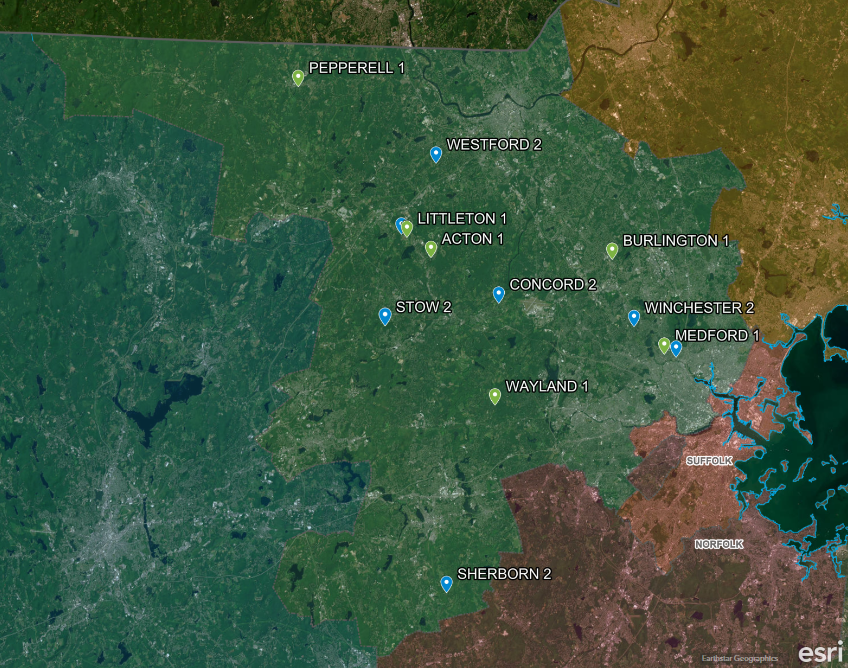
Since we are a county of 54 municipalities, we had to make sure that we covered a significant portion of the county. The properties selected come from the following towns and cities: Acton, Burlington, Littleton, Medford, Pepperell, and Wayland.
Towns Selected for the Second Round of the Program
The towns selected in our second round include Concord, Littleton, Medford, Sherborn, Stow, Westford, and Winchester.
Landscape Assistant
Brian Mariano is our Landscape Assistant. Brian helps with the physical transformation of the lawn into native meadow. This includes aeration, soil testing, laying out cardboard, spreading soil, spreading seeds, watering, and monitoring of each plot.
Plot Details and Plan
Each plot is about 100ft2. Most of the plots in the first round were about 10′ by 10′; one was 6′ by 16′. The second round plots have a more variable shape to them according to the design of the property owner. The plots are a mix of direct sun, partial sun. They are also within rural, suburban, and urban areas of the county.
First and Second Visits
The first visit consists of measuring and marking the plots, locating the water connection, introducing the team, aerating the soil, and taking a soil sample for testing. The second visit consists of spreading cardboard, dumping and spreading soil, broadcasting the seed, raking the seed in and watering.
View the picture gallery below to see the process!
Soil Tests
All soil samples go to UMass Amherst to test for nutrients. The soil in the first rounds were in rough shape as the pH was between 4.9 to 6. All tended to be low or very low in macronutrients including phosphorus, potassium, calcium, and magnesium. They were in optimal range of most nutrients, including boron, copper, iron, manganese, and zinc. Medford ended up high in lead but was at optimum level for Phosphorus. Pepperell was above optimum in Magnesium.
Seed Germination
After exposure to the sun, water, and soil, seeds will start geminating. Seeding is best done in the fall, especially since a significant number of native plants require something called cold stratification. This is when seeds need a certain number of cold days under freezing to break the seed’s dormancy. We used both a seed mix and some individual seed species as well. All seeds, including the mix, are native to Massachusetts except for purple coneflower (Echinacea purpurea). Purple coneflowers aren’t quite native to New England. However, they are a signal to others that you are doing a good deed by planting natives, and they benefit our ecosystem. In our second year of the program, we used another seed mix that had a larger variety of native plants. Covering the seeds with straw or salt marsh hay can further protect them from hungry animals. Though as with nature, not every seed will make it.
Winter Sowing
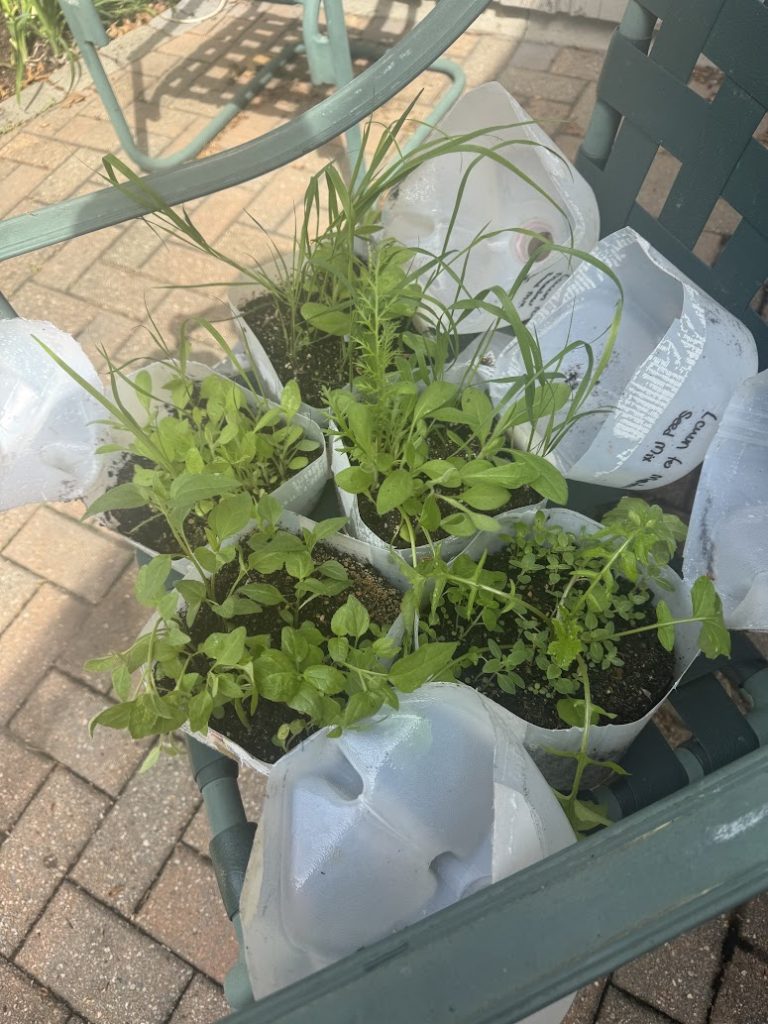
To increase the success of our plots, we implemented winter sowing of the seed mix we used for the second round. Winter sowing consists of using translucent containers, such as milk jugs, soil, and native seeds to make mini greenhouses. You can watch a recording of our winter seed sow workshop, “Native Seed Winter Sow with Isabel Bailey” on our Previous Workshops and Other Programs page. We also have more information about winter sowing on our Resources page. The end result of winter sowing is your own small native plants to put in your meadow or garden. We made three jugs per a property so that each property has live plants to directly sow into their meadow in the spring.
Plugs
As another method for installing a meadow, we also bought native plant plugs to be inserted into the existing meadows. We bought a total of nine species totaling about 950 plugs split between thirteen properties. Each property received 34 to 35 plugs in a kit (around three to four of each plant species). Since these plugs were older, they had a better chance of surviving and growing into larger plants for each meadow. To ensure the survivability of the plugs, we asked the property owners to water the plants until they were established (about one to two weeks of watering).
We have provided pictures below of their development.
Training
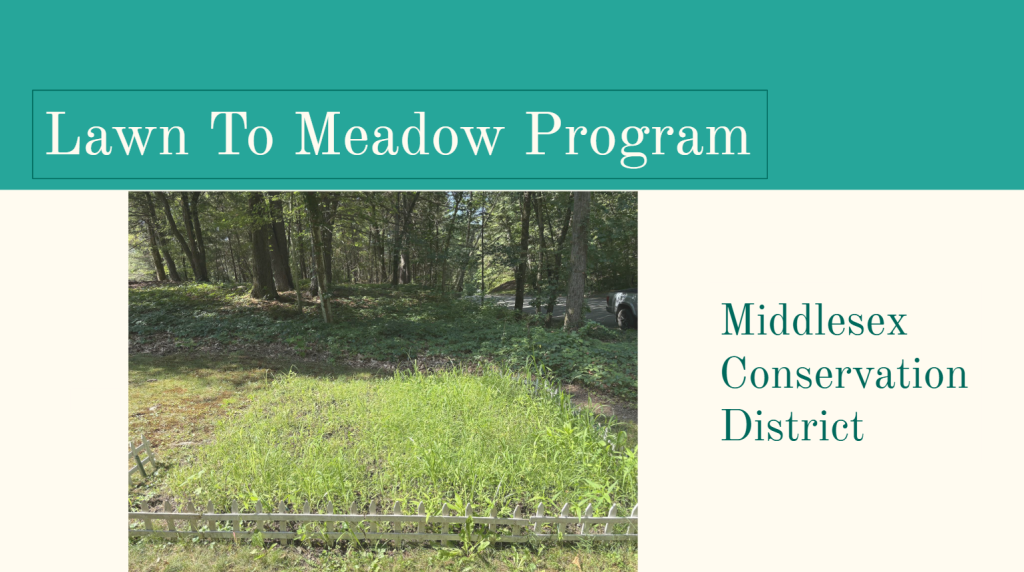
Watch the training here for the Lawn to Meadow Program. This presentation is for anyone who is interested in participating in our Lawn to Meadow Program. It will outline the goals of the program, what can be expected from the Middlesex Conservation District, and what will be expected from participants. Miri Becker, one of the Supervisors of the Middlesex Conservation District, spoke at this training.
Workshops and Demonstrations
We will be putting on two workshops for our Lawn to Meadow Program with Mass Audubon. This will include one workshop geared towards homeowners and another geared towards landscapers and landscape professionals. There will also be a tour of demonstration plots where we will show the success and working of the project. Our workshop for Landscapers will be May 14th. The workshop for homeowners will be on May 15th.
Transforming Lawns into Native Meadows for Landscape Professionals
May 14th, 2025 from 1:00 PM to 3:00 PM at Mass Audubon’s Habitat Education Center and Wildlife Sanctuary in Belmont.
Transforming Lawns into Native Meadows for Homeowners
May 15, 2025, from 6:00 PM to 8:00 PM at Mass Audubon’s Habitat Education Center and Wildlife Sanctuary in Belmont.
Native garden at Sunny Meadows in Chelmsford
June 21, 2025, from 10:00 AM to 12:00 PM at Sunny Meadows Farm in Chelmsford.
Lawn to Meadow Program Training on Zoom
Presented by Miri Becker, a Supervisor of the Middlesex Conservation District
Watch on Demand
Educational Resources
From Universities and Organizations
- From the University of New Hampshire
- Planting for Pollinators: Establishing a Wildflower Meadow from Seed [fact sheet]
- “How To” Webinar on Planting Wildflower Meadows
- Wildflower Meadows – Plant Selection and Establishment
- Planting for Pollinators: Establishing a Wildflower Meadow from Seed
- Pollinator Plants for Northern New England Gardens New England Gardens
- Flowering Chart for Meadow Wildflowers in Southern New Hampshire
- Wildflowers for New England Meadows and Pollinator Plantings
- Custom Wildflower Mix for Trial in New Hampshire
- Seed Sources for New England Meadows
- Seed of Native Perennial Wildflowers and Native Grasses
- From Cornell University
- Wild Seed Project
- Xerces Society for Invertebrate Conservation
- From Lincoln Land Conservation Trust and Rural Land Foundation
- From Homegrown National Park
- From Prairie Moon Nursery
Books
- Lawns into Meadows: Growing a Regenerative Landscape, Author: Owen Wormser. Stone Pier Press, 2022.
- Nature’s Best Hope, Author: Douglas W. Tallamy. Timber Press, 2019
- Garden Revolution: How Our Landscapes Can Be a Source of Environmental Change, Authors: Larry Weaner and Thomas Christopher. Timber Press, 2016.
- Urban & Suburban Meadows: Bringing Meadowscaping to Big and Small Spaces, Author: Catherine Zimmerman. Matrix Media Press, 2010.
Local, Native Seed Availability
- Blue Stem Natives
- Seeds collected ethically from local 59 Ecoregion
- Ecotype 59/Northeast Seed Collective
- Connecticut and New York sourced
- Ernst Conservation Seed
- New Jersey, Pennsylvania, and surrounding areas sourced
- Toadshade Wildflower Farm
- Seed collected in New Jersey, New York, or Pennsylvania
- Wild Seed Project
- Maine sourced
- The Monarch Gardener
- Locally sourced from Essex County, MA
Grow Your Own Native Garden DIY
- Homegrown National Park Keystone Garden
- Homegrown National Park Beginner’s Garden
- Homegrown National Park Mixed Wood Plains Keystone Garden
- Prairie Moon Nursery Garden Kits (Minnesota)
- Garden for Wildlife Garden Kits
- Native Plant Variety Packs – Bass Rouge Farm & Forge (Maine)
- Pollinator Pocket Meadow Kit – Mystic Meadow Gardens (Pepperell, MA)
- Radical Lawn Kits – Butterfly Effect Farm (Westport, MA)
- Native Plant Trust 2026 Plug Trays and Pollinator Kits (Framingham and Whately, MA)
Videos
- Cultivating a Sustainable Future: The Cornell Botanic Gardens Native Lawn with Todd Bittner by the Native Plant Society of New Jersey
- Goodbye Lawn – Alternatives to Grass for Easy Landscaping by Norwell Public Library. Speaker: Todd Breitenstein of Our Greatful Garden
- Sheet Mulching: Lawn to Garden Bed in 3 Steps by Penn State Extension
- [Adding winter sown native plants to your garden] January 23, 2024 by nikki
Professionals
- Alexis Doshas – Manager of Nasami Farm
- Dr. Douglas Tallamy – Author of Nature’s Best Hope and Professor of Agriculture and Natural Resources at the University of Delaware
- Kathy Connolly – Landscape designer
- Owen Wormser – Landscaper and Owner of Abound Design
- Todd Bittner – Director of Natural Areas at Cornell Botanical Gardens