
Written by Andrea Grossman. Edited by Kaitlyn McAuley.
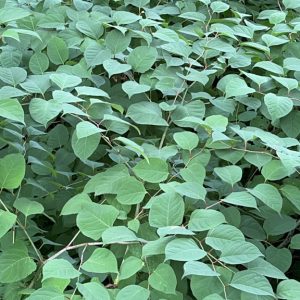
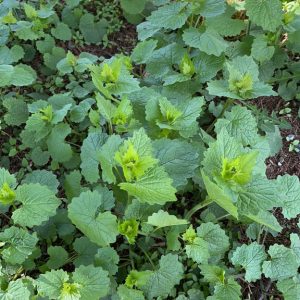
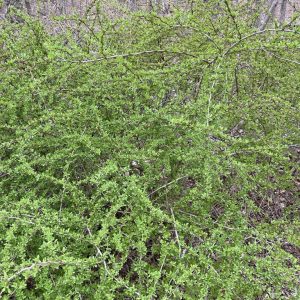
Invasive plants can feel like the bane of a land steward’s existence. Just when we think we’ve got them under control, these tenacious opportunists pop back up, signaling that more work is needed.
It’s not that invasives are inherently “bad”; in fact many have naturalized and provide a degree of wildlife value in the form of shelter and food, but they disrupt ecosystems nonetheless.
A plant is considered invasive if it originated from another continent, country, or region where it did not evolve alongside local flora and fauna. Some native plants, like Canada goldenrod (Solidago canadensis), have a reputation for spreading widely, but only non-native plants can be invasive; these are better described as aggressive.
Where Did They Come From and Why?
Invasive plants have established footholds in Middlesex County over centuries, arriving from Eurasia, Africa, and even across continental divides in the United States. They have traveled by many means, including the plant trade, shipping vessels, and even on our own clothing and gear.
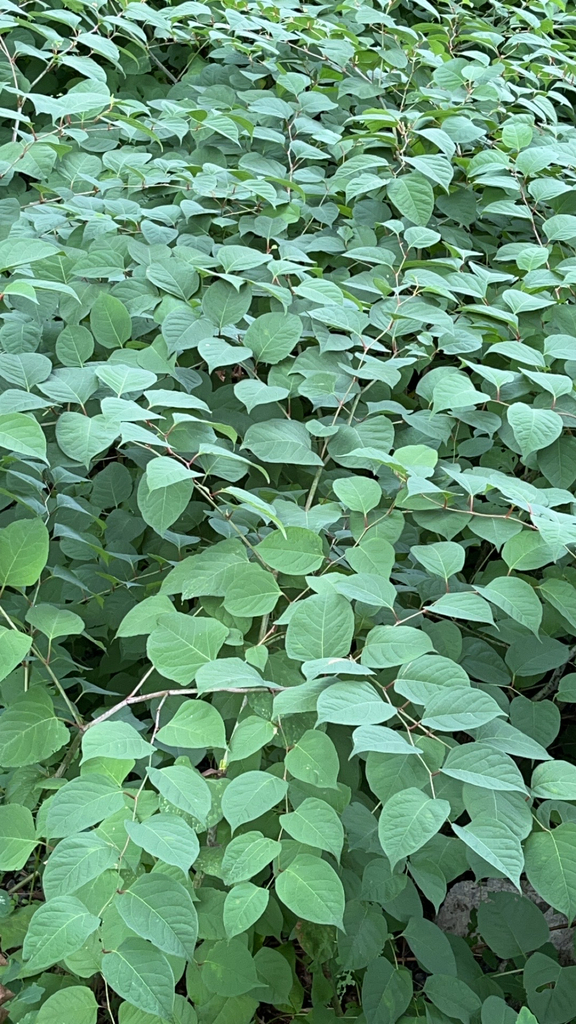
Unfortunately, numerous plants were introduced intentionally. Plants we thought would look nice as a wreath, or erosion control, or just a general pretty garden plant ended up “escaping” where they were planted and spread via seed (ex: wind, birds, people), parts of plants (knotweed), or roots (rhizomes or stolons).
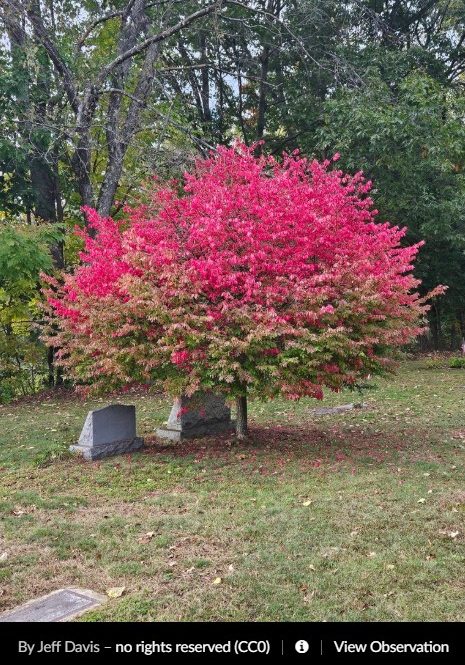
Plants like burning bush (Euonymus elatus), dame’s rocket (Hesperis matronalis), or Asian Bittersweet (Celastrus orbiculatus) may have attractive qualities, but do not belong here just because we humans find them appealing.
Indigenous peoples moved plants within regions where those species already had established ecological relationships. In contrast, global trade and modern travel introduced plants across continents, placing them into ecosystems with no evolutionary context.
How Are Invasive Plants Destructive to Our Ecosystem?
Invasive plants impact our ecosystem in a myriad of ways: creating monocultures, decreasing biodiversity, altering soil chemistry, harming native animals, shading out the understory, lacking natural predators, creating economic damage, clogging waterways, and increasing fire potential.
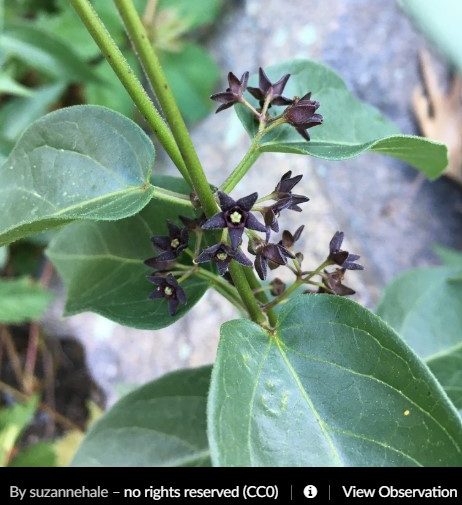
Garlic mustard, once established, alters soil chemistry and suppresses native plant growth. Asian bittersweet climbs and girdles trees and shrubs, eventually killing them. Monarch butterflies mistake black swallowwort for native milkweed; caterpillars that feed on it die. Burning bush may be dazzling in autumn, but it produces berries that native fauna cannot digest and readily disperse, crowding out more ecologically valuable species. The unripe berries of Glossy buckthorn can act as a strong laxative which weakens birds by increasing dehydration and nutrient uptake. It can also create dense shade making it difficult for native plants to grow underneath.
Management of Invasives
So what plants are invasive and what can we do about them? There are a lot of invasive plants in Massachusetts and beyond. There are even plants that are potentially invasive and might eventually go on the Massachusetts Prohibited Plant List. Lily of the valley, English ivy, and butterfly bush are also quite aggressive and spread beyond the locations they were planted in.
Managing invasive species can take various approaches depending on what type of plant it is, how it spreads, what the root system is like, where it grows, how large the plant is, if it is toxic to handle, or if it is woody versus herbaceous. For instance, garlic mustard is an herbaceous plant, its roots are quite shallow even when they are in their second-year stage. These can easily be pulled out and bagged (especially if they have already been seeded). However, the seed viability of this species lasts six to seven years. Meaning manual removal of the mustard will take a few years to remove every plant. Water chestnuts can be pulled without worrying about too much regrowth of the same plant since it is an annual species. However, taking the entire plant out, including the seed head and seeds attached to the underside of the plant will significantly decrease regrowth.
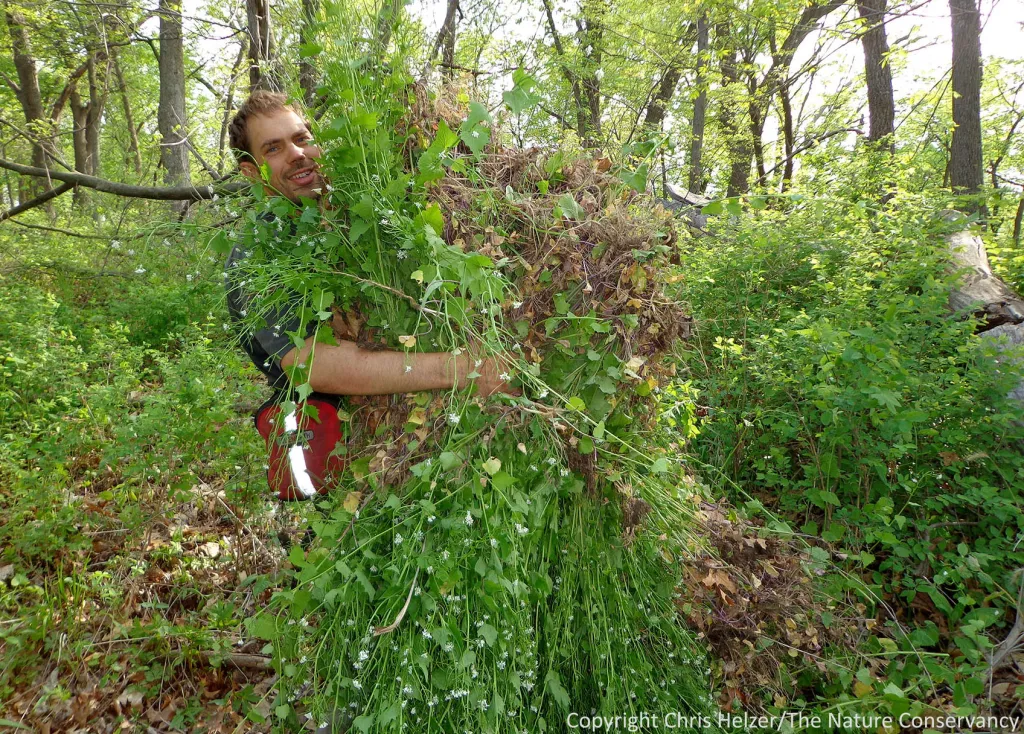
No matter what method you use to remove an invasive species, it will likely take more than one year to get rid of an infestation. If you do not want to use chemical applications, keeping on every single plant and root is necessary to stop the spread.
Depending on the plant species, if it regenerates from a fragment, or has seeds/berries on it, disposal can vary. The surest way to dispose of any invasive plant is to bag and trash it. If there are no berries, and the entire plant is above or far away from soil, water, or other vegetation, you can dry it out completely and compost it (we would be careful with Japanese Knotweed as small, tiny fragments can regrow into a whole new plant).
CBS Boston. (2025, September 4). Pepperell retiree helps rid town of invasive plants. . Youtube. https://www.youtube.com/watch?v=DFf54JfNfLw
On the other hand, Asian bittersweet is a woody vine, its roots and branches can get thick, the roots spread horizontally underground, and its berries can be spread by birds. Any physical removal of plants larger than seedlings may include clippers up to handsaws. All root material must be removed, or it will resprout.
Chemical control is sometimes necessary for certain invasive species, though non-chemical methods are often preferred. Herbicides should not be broadly applied across large areas, as they can affect non-target vegetation and enter nearby soil and waterways. When chemical treatment is warranted, targeted techniques such as stem injection or direct application to cut stems or roots can minimize impacts on surrounding plants. These approaches are often used for species such as Japanese knotweed, which may be difficult to control through manual removal alone.
Additional management strategies may be available depending on the species. In some cases, researchers have developed biological control agents that target a specific invasive plant, though these programs typically require extensive research, testing, and funding. Prescribed burning may also be an effective management tool in appropriate settings. Following removal, establishing competitive native vegetation can help prevent invasive species from recolonizing the site.
Friends of Acadia. (2013, June 27). Bush Honeysuckle Timelapse. . Vimeo. https://vimeo.com/69269461?fl=pl&fe=vl
Native Alternatives and Restoration
Love the look of burning bush or other popular invasive plants? Native alternatives can provide similar color, texture, and seasonal interest while supporting local ecosystems. Select an invasive plant below to view recommended native alternatives.
Amur honeysuckle (Lonicera maackii)
- Spicebush (Lindera benzoin)
- Highbush blueberry (Vaccinium corymbosum)
Asian bittersweet (Celastrus orbiculatus)
- American bittersweet (Celastrus scandens)
- Northern bush honeysuckle (Diervilla lonicera)
- Virginia creeper (Parthenocissus quinquefolia)
- Trumpet honeysuckle (Lonicera sempervirens)
Autumn olive (Elaeagnus umbellata)
- Mapleleaf viburnum (Viburnum acerifolium)
- Black chokeberry (Aronia melanocarpa)
- Spicebush (Lindera benzoin)
- Black haw (Viburnum prunifolium)
- Inkberry (Ilex glabra)
- Winterberry (Ilex verticillata)
- Possumhaw viburnum (Viburnum nudum)
Black Swallowwort (Cynanchum louiseae) or Pale Swallowwort (Cynanchum rossicum)
- Northern bush honeysuckle (Diervilla lonicera)
- Trumpet honeysuckle (Lonicera sempervirens)
- Virginia creeper (Parthenocissus quinquefolia)
- Common milkweed (Asclepias syriaca)
- Rose/Swamp milkweed (Asclepias incarnata)
Burning bush / Winged euonymus (Euonymus alatus)
- Dwarf fothergilla (Fothergilla gardenii)
- Highbush blueberry (Vaccinium corymbosum)
- Red chokeberry (Aronia arbutifolia)
- Possumhaw viburnum (Viburnum nudum)
Butterfly bush (Buddleja davidii)
- Butterfly weed (Asclepias tuberosa)
- Blue wild indigo (Baptisia australis)
- New Jersey tea (Ceanothus americanus)
- Steeplebush (Spiraea tomentosa)
- New York ironweed (Vernonia noveboracensis)
- Buttonbush (Cephalanthus occidentalis)
Common Mugwort (Artemisia vulgaris)
- Aster novae-angliae (New England Aster)
- Solidago speciosa (Showy Goldenrod)
- Asclepias syriaca (Common Milkweed)
- Pycnanthemum virginianum (Virginia Mountain mint)
English ivy (Hedera helix)
- Virginia creeper (Parthenocissus quinquefolia)
- Golden groundsel (Packera aurea)
- Wild ginger (Asarum canadense)
- Christmas fern (Polystichum acrostichoides)
- Common alumroot (Heuchera americana)
- Native violet species (Viola spp.)
Garlic mustard (Alliaria petiolata)
- White baneberry (Actaea pachypoda)
- Red columbine (Aquilegia canadensis)
- Black cohosh (Cimicifuga racemosa)
- Common yarrow (Achillea millefolium)
Glossy/alder buckthorn (Frangula alnus) and European buckthorn (Rhamnus cathartica)
- Nannyberry (Viburnum lentago)
- Arrowwood viburnum (Viburnum recognitum or Viburnum dentatum)
- Black chokeberry (Aronia melanocarpa)
- Gray dogwood (Cornus racemosa)
- Common witch-hazel (Hamamelis virginiana)
- American elderberry (Sambucus canadensis)
Japanese barberry (Berberis thunbergii) and common barberry (Berberis vulgaris)
- Common ninebark (Physocarpus opulifolius)
- Buttonbush (Cephalanthus occidentalis)
- Swamp rose (Rosa palustris)
Japanese honeysuckle (Lonicera japonica)
- Trumpet Vine (Campsis radicans)
- Coral honeysuckle (Lonicera sempervirens)
Japanese knotweed (Fallopia japonica) and giant winged knotweed (Fallopia sachalinensis)
- New England aster (Aster novae-angliae)
- Blue false indigo (Baptisia australis)
- Sweet Joe-Pye weed (Eupatorium purpureum)
Lily of the valley (Convallaria majalis)
- Wild ginger (Asarum canadense)
- Canada mayflower (Maianthemum canadense)
- Ramps (Allium tricoccum)
Multiflora rose (Rosa multiflora)
- New England rose (Rosa nitida)
- Pasture rose (Rosa carolina)
- Swamp rose (Rosa palustris)
- Virginia rose (Rosa virginiana)
Purple loosestrife (Lythrum salicaria)
- Fireweed (Chamaenerion angustifolium)
- Blue vervain (Verbena hastata)
- New England blazing star (Liatris novae-angliae)
- Swamp milkweed (Asclepias incarnata)
Norway maple (Acer platanoides)
- Sugar maple (Acer saccharum)
- Red maple (Acer rubrum)
- Silver maple (Acer saccharinum)
- American basswood (Tilia americana)
- Red oak (Quercus rubra)
- White ash (Fraxinus americana)
- Tuliptree (Liriodendron tulipifera)
- Black gum (Nyssa sylvatica)
Rose of Sharon (Hibiscus syriacus)
- Swamp rose-mallow (Hibiscus moscheutos)
Tree of heaven (Ailanthus altissima)
- Staghorn sumac (Rhus hirta)
- Winged sumac (Rhus copallinum)
- Smooth sumac (Rhus glabra)
- White walnut (Juglans cinerea)
- Shagbark hickory (Carya ovata)
- Bitternut hickory (Carya cordiformis)
Water chestnut (Trapa natans)
- Fragrant water lily (Nymphaea odorata)
- Spatterdock (Nuphar variegata)
- Watershield (Brasenia schreberi)
The remedy for ignorance is awareness; Our education system has largely failed to cover the value of natural resources, leaving many people unaware that we are part of nature and that our choices affect it. Some introductions of invasive plants stem from that gap; others reflect willful disregard. Building familiarity with the natural world, starting with children and building outward, is how we close it.
Ways to connect with nature:
- Walk in conservation land or a local park
- Kayak a river and observe what grows along the banks
- Run a flower or insect scavenger hunt with kids
- Use iNaturalist to identify and document what you find
When we understand why certain plants don’t belong in our backyards, we can actively support the ecosystems that do.
A Gallery of Some Other Invasive Plants for Identification
Note: English Ivy (Hedera helix) and European Lily of the Valley (Convallaria majalis) are not yet prohibited in Massachusetts but are listed as invasive in other states. The photo gallery above does not include all of the plants listed as invasive or prohibited for sale in Massachusetts.
Links to Learn More:
General Invasive Species Information
- How Invasive Species Spread – NPS
- Terrestrial Plants (Invasive) – USDA National Invasive Species Information Center
- Aquatic Plants (Invasive) – USDA National Invasive Species Information Center
- Massachusetts Prohibited Plant List – Mass.gov
- What is an invasive species and why are they a problem – USGS
- Invasive Plants in Massachusetts – Mass Audubon
- Invasive Plants – City of Medford
- Invasive Species Management – MACC
- SuAsCo CISMA
- Invasive Species of Acton – Town of Acton Massachusetts
- Native Plants Versus Invasives – Waltham Land Trust
- Center for Invasive Species and Ecosystem Health
- Plants voted as: Invasive – Massachusetts Invasive Plants Advisory Group
- Prohibited Plant List – FAQ – Mass.gov
- Invasives – CISMA Sudbury-Assabet-Concord River Watershed
Some Specific Invasive Plants
- Water Chestnut – OARS 3 Rivers
- Black and pale swallow-worts: These milkweed family members are toxic to monarchs – Michigan State University MSU Extension
- Tree of Heaven – The Nature Conservancy
- Native Plant Guide: Beware of the tree-of-heaven – Written by Jane Warren of Lexington Minuteman
- Autumn Olive: Your Invasive Seedy Neighbor – The Nature Conservancy
- Burning Bush (Euonymus alatus) – Town of Andover
- Garlic Mustard – Mass Audubon
- Porcelain Berry – Town of Natick
- Species Spotlight: Japanese Barberry – National Park Service
- Lyme Disease-Toting Ticks Abundant on Common Invasive Plant, New Study Finds – Written by Kristen Cole of Trinity College
Types of Control Methods
- Control Mechanisms – USDA
- Biocontrol – NAISMA
- Biocontrols in NCR – NPS
- Biocontrol: Path to Approval – Cornell University: New York Invasive Species Research Institute
- A Gridiron Guide to Fighting Invasives with Native Plants – Written by Tim Castelli of Native Plant Society of Texas
- 19 Aggressive Native Plants that can Battle Invasive Species – Written by Jerad Bryant of Epic Gardening
- We only recommend the following plants for the list that are native to here: (Wild Bergamot, Lance Selfheal, Goldenrods, Spring Beauty – Claytonia caroliniana and virginica, Ostrich Fern, Black Eyed Susan, Mountain Mint, Jewelweed – Impatiens capensis and pallida, Poison Ivy – yes we know this is toxic to humans but is beneficial to wildlife, and Staghorn Sumac)
- Integrated Weed Management – Rodale Institute
- Integrated Weed Management for Pastures and Hayfields – A Guide for Landowners – University of New Hampshire
- Invasive Plant Management for Habitat Restoration – Mass.gov
- Controlling Invasives – Native Plant Trust
- Invasive Species Management – Mass Audubon
- Common Invasive Species and How to Manage Them – Native Plant Trust
- National Strategic Framework for Invasive Species Management – US Forest Service
Native Alternatives to Invasive Plants
- Alternatives to Invasive Landscape Plants [fact sheet] – UNH Extension
- Native Alternatives for Invasive Ornamental Plant Species – Association to Preserve Cape Cod
- Alternatives to invasive or potentially invasive exotic species – Maine.gov
- Plant This, Not That: 10 Invasive Species and their Vineyard-Native Alternatives – Written by Robyn Graygor for Bluedot Living
- Invasive Plants of Lincoln and its Watersheds: Identification, Control, and Native Alternatives – Lincoln Land Conservation Trust
- After Removing Disruptive Introduced Species, Try Planting These – Wild Seed Project