
Written by Andrea Grossman.
[tb-dynamic-container provider=” source=” field=” removeDeadLinkTarget=”true”]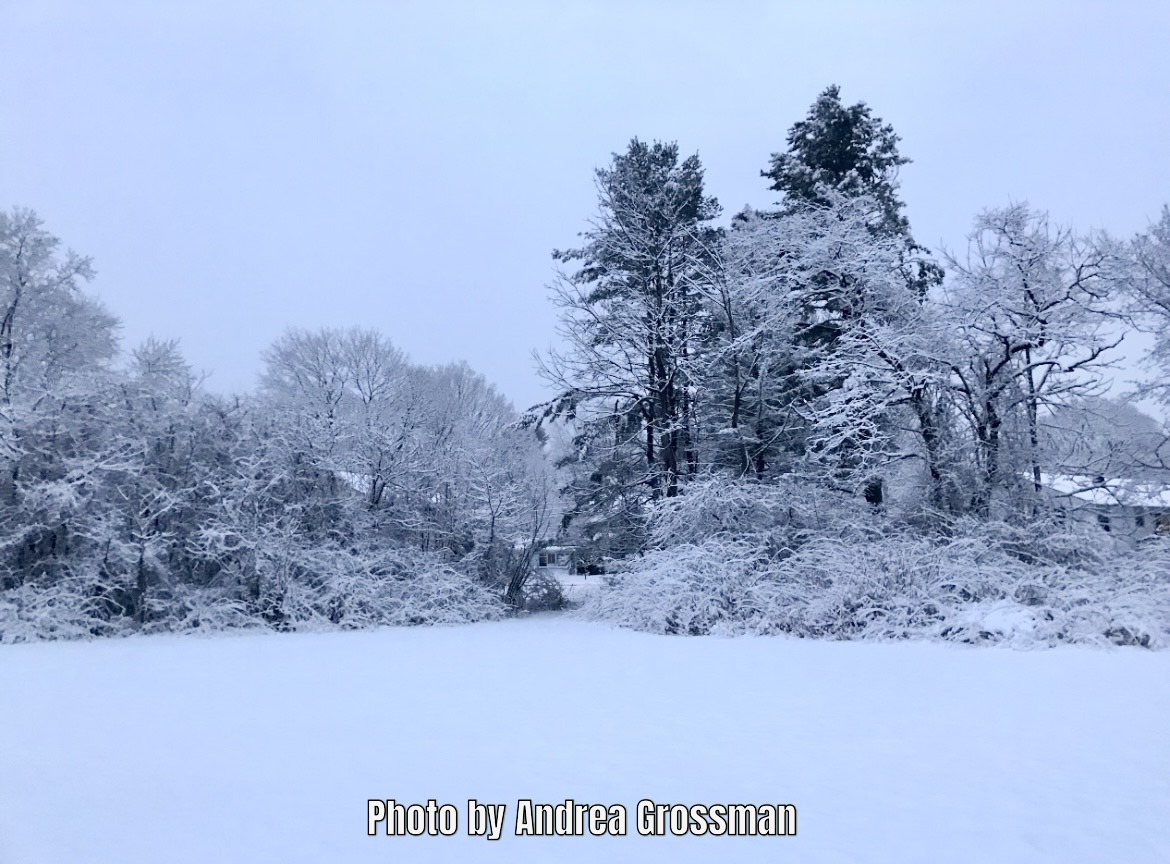
Our recent snowfall gives us pause in the frigid winter of the classic New England landscape. Our gardens become quiet, and flower beds settle under blankets of snow. While squirrels and foxes tramp through the snow, we may wonder, “Where do all the butterflies and bees have gone to rest. What birds stay in this harsh climate and what do they feed one while we wait till warmer summer days?”
When temperatures drop and days shorten, bees will tuck away in sheltered, quiet spots including rotting logs, hollow plant stems, holes left by wood-boring beetles, under leaves, debris piles, and even back in the nests they were born in. Bees enter a diapause, a state of lower metabolic activity, for months until spring. Once in this state, they cannot exit and re-enter this stage even if there is a warm day in the middle of winter. In fact, if they do break hibernation, it could prove fata
Most native bee adults do not survive the winter months. Instead, it is their eggs that survive to the next year. These pupae survive entirely on food such as pollen left by their mothers. However, queen bumblebees shelter in rodent burrows underground. These burrows are insulated by fallen leaves.
Most know that monarch butterflies migrate south during the winter. However, the vast majority butterflies and moths, known together as Lepidoptera, overwinter here under the leaf litter, providing a layer of warmth under the layers of snow. These species include Luna moths and swallowtail butterflies. Their cocoons and chrysalises are disguised as dried leaves.
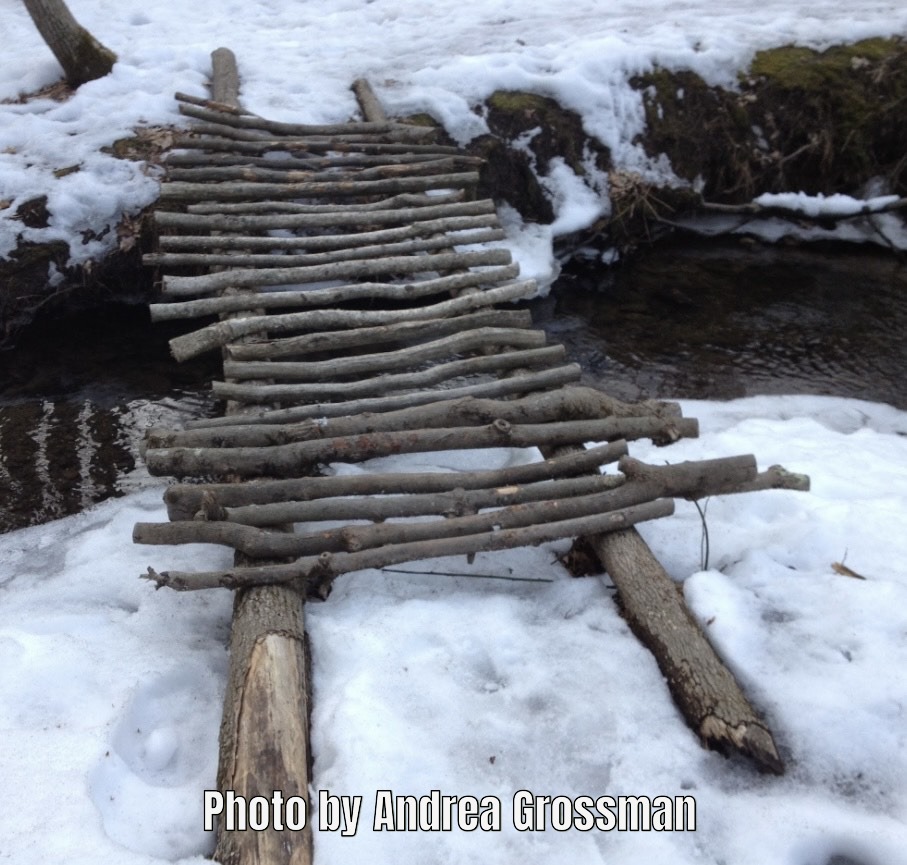
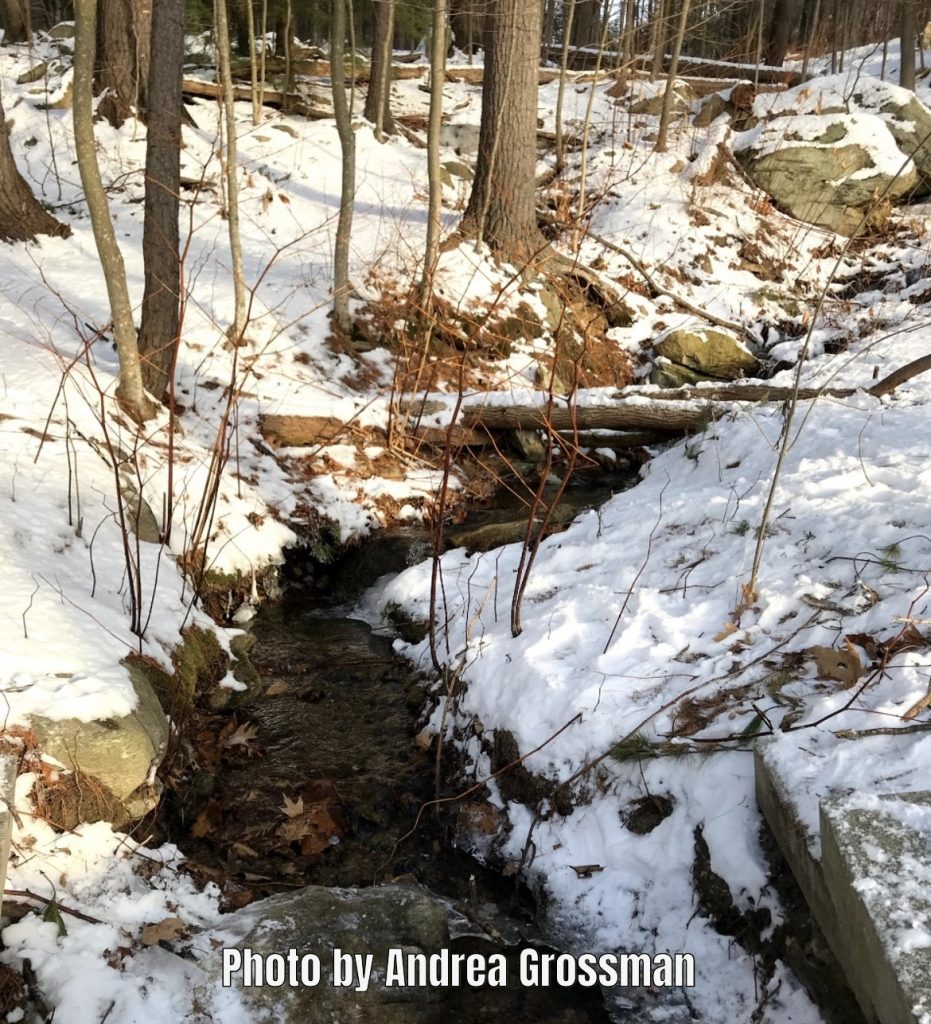
Surprisingly, the mourning cloak butterfly overwinters as an adult under fallen leaves, within tree bark, and logs. These areas create microclimates that protect them from freezing temperatures and fluctuations that could kill them. Another interesting species includes the red-banded hairstreak. While most caterpillars are known for eating live plant material, the caterpillars primarily consume decaying leaves such as those from oaks and sumacs.
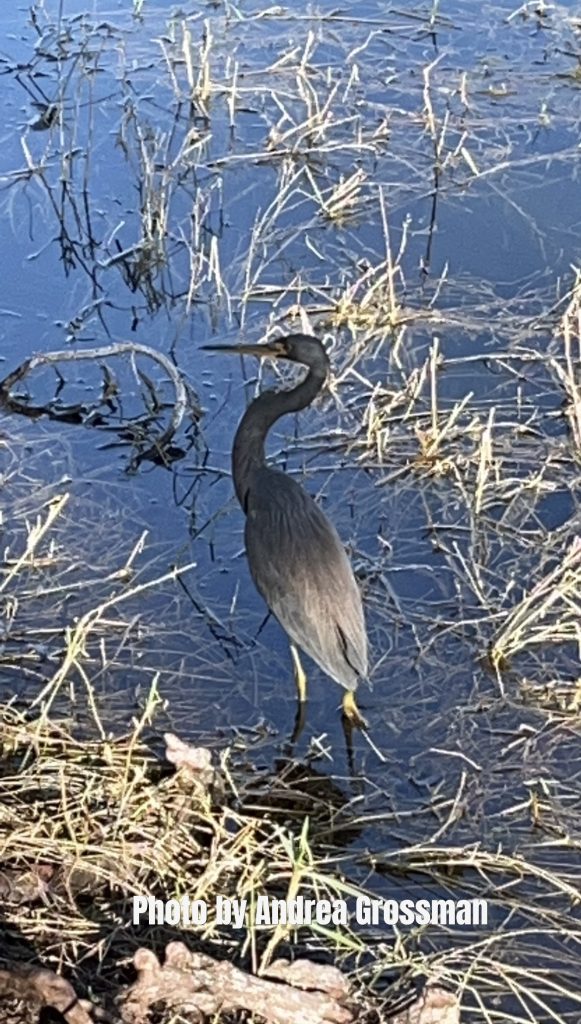
While most birds fly south for the winter, there are quite a number of birds that stay year-round. Birds such as the dark-eyed junco, American crow, black-capped chickadee (our state bird!), Carolina wren, great blue heron, wild turkeys, and many others stay year-round in Massachusetts. Snow buntings, kinglets, American tree sparrows, and some others even migrate to or through the Massachusetts South during the winter season.
Birds that stay here through the winter are usually frugivores (fruit), granivores (seed), and omnivores (plant an animal matter). They will eat seeds from goldenrod, sedges, grasses, coneflowers, and black-eyed Susans. Ones that eat fruit will eat berries and fruits from blueberries, sumacs, dogwoods, cranberries, grapes, blackberries, roses, choke cherries, sumacs, viburnums, junipers, and more. Of course, birds of prey only eat animal matter (carnivorous). Rough-legged hawks will mostly eat voles, mice, shrews. The diet of bald eagles includes salmon, herring, shad, crabs, other birds, amphibians, muskrats. Barred owls eat amphibians, voles, mice, rabbits, chipmunks, invertebrates, and even sometime fish.
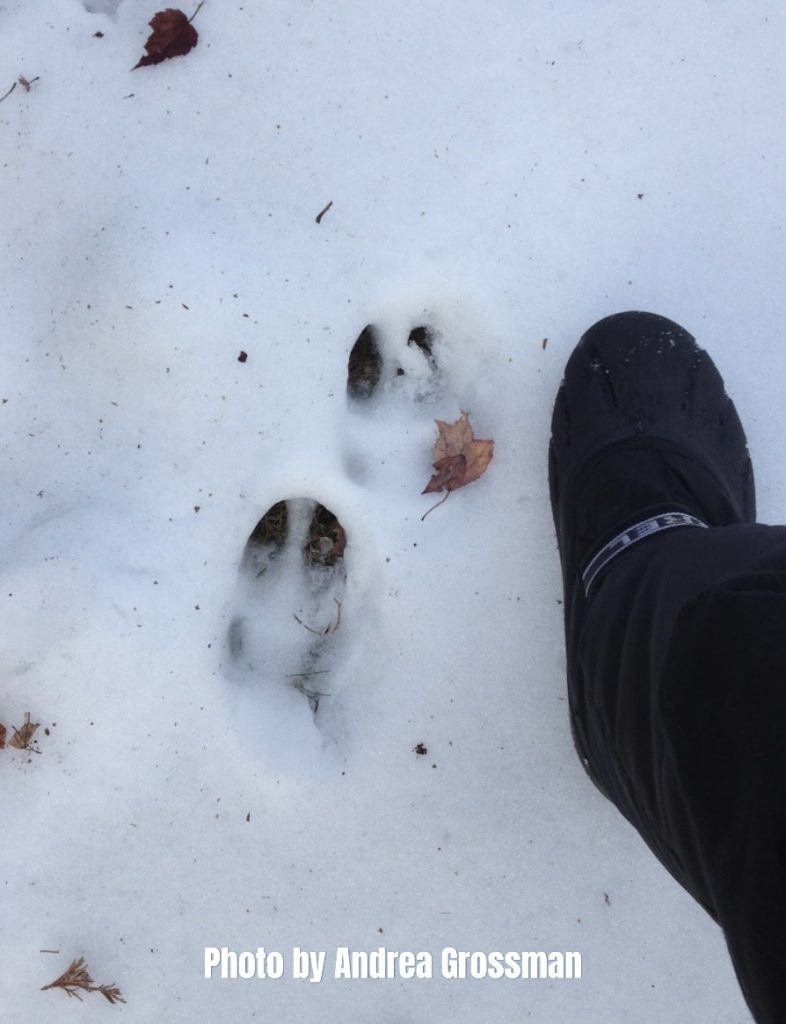
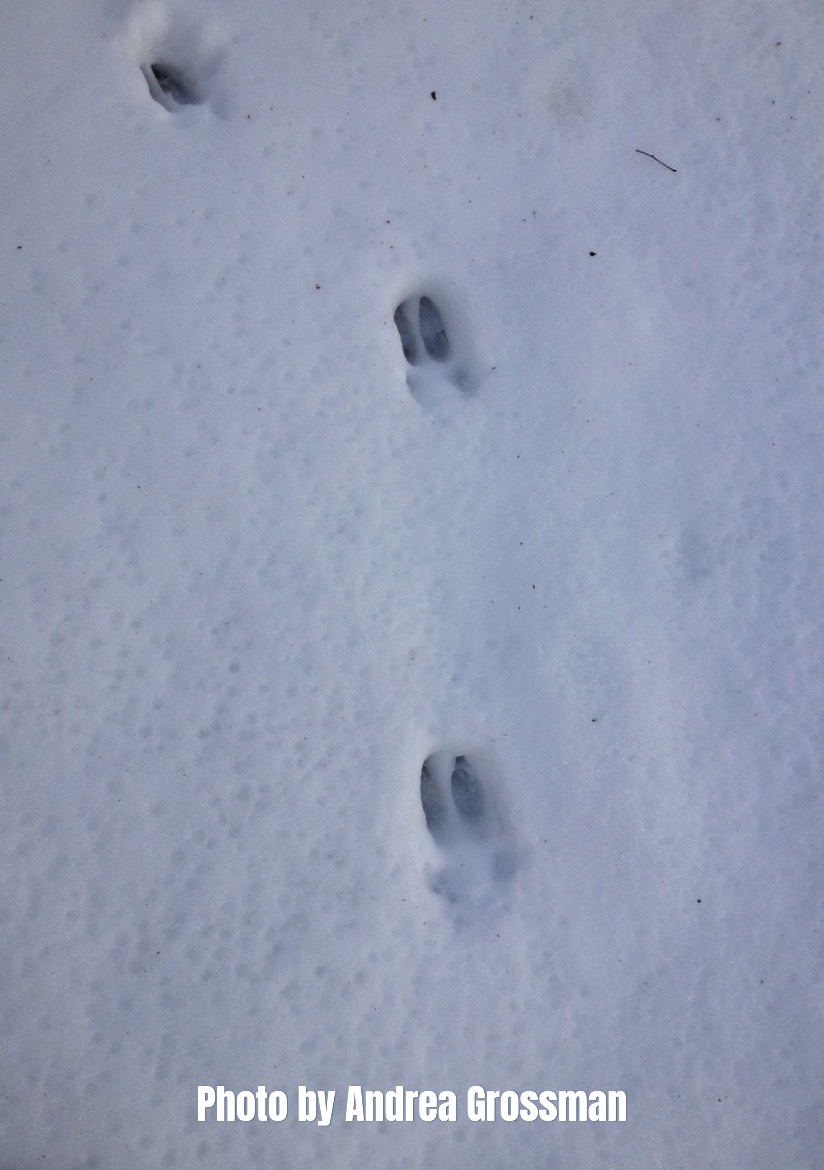
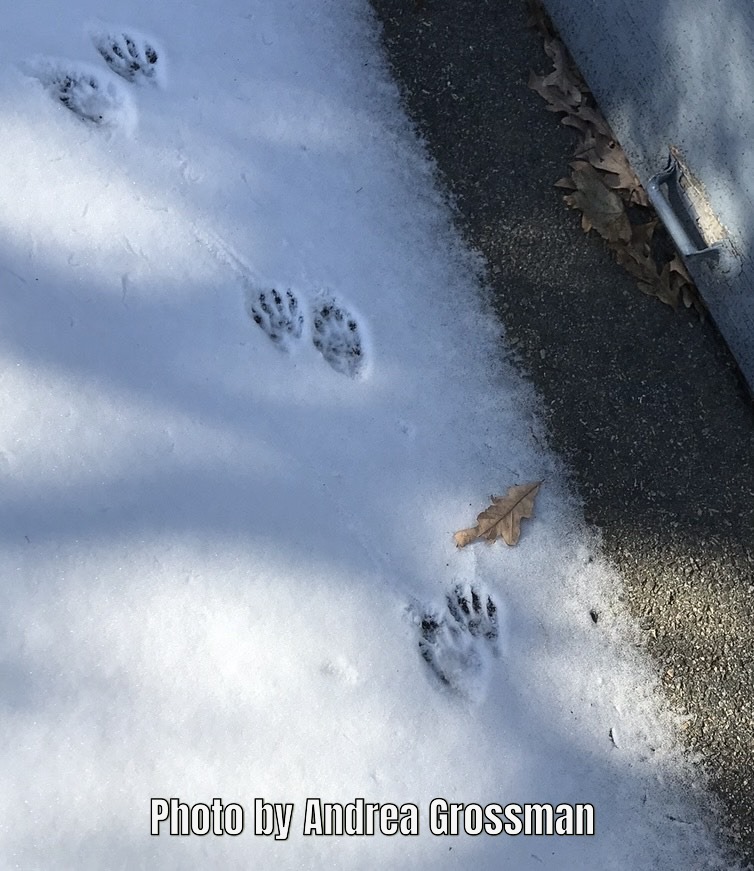
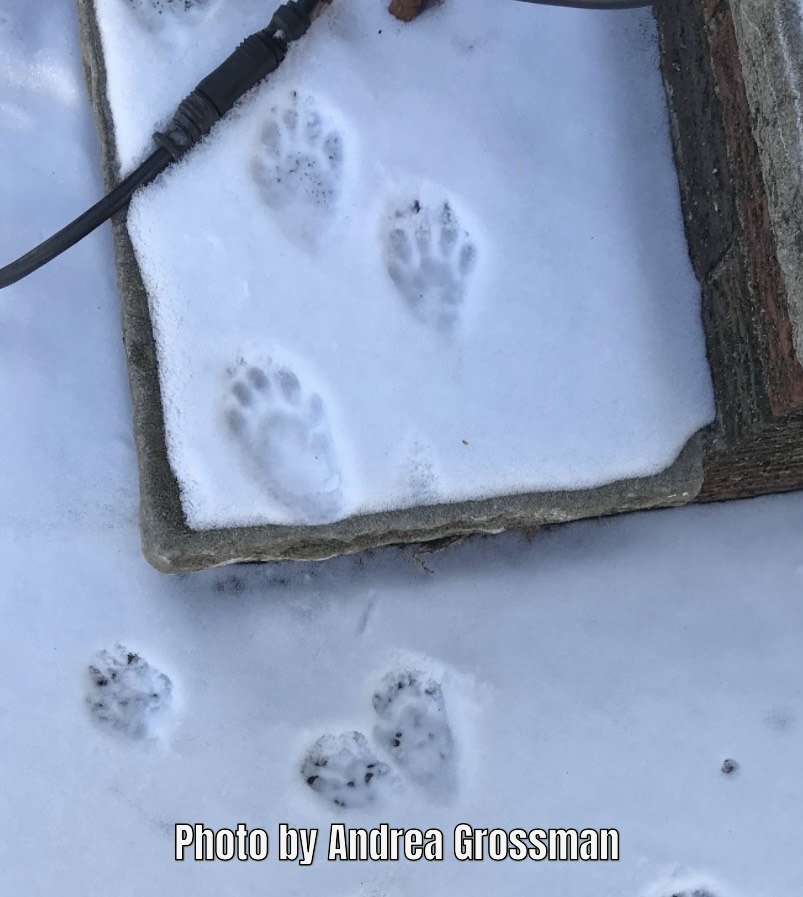
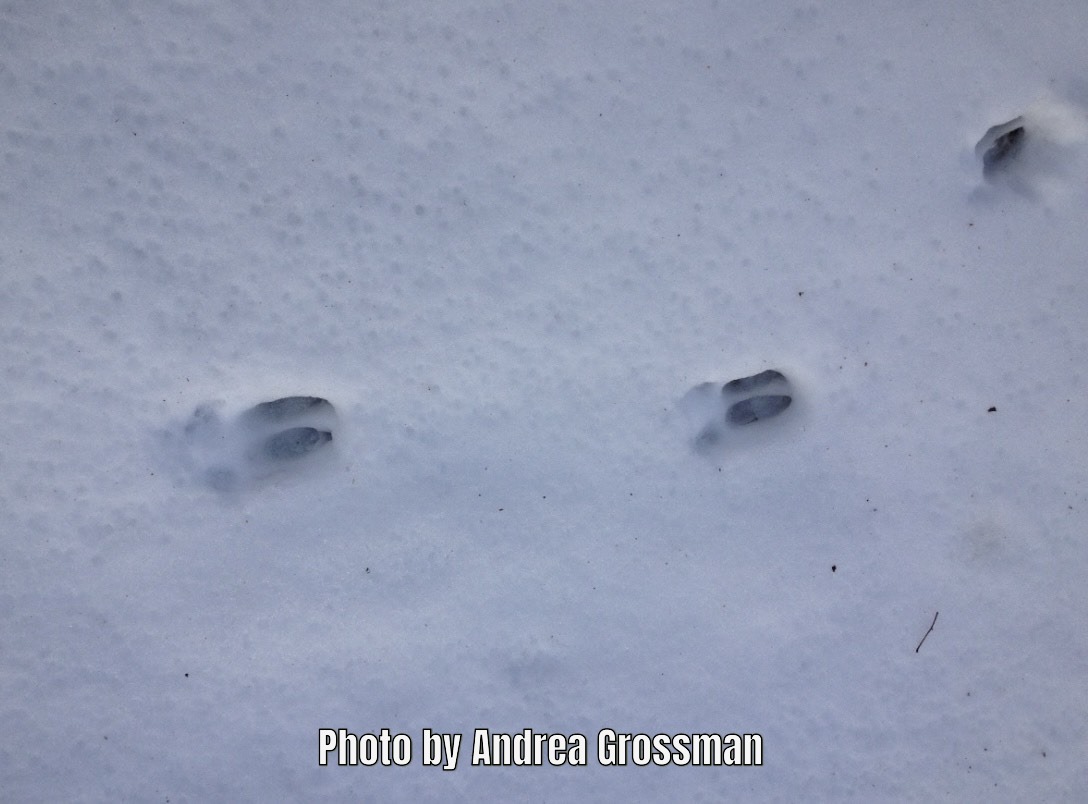
While we are talking about animals, the next time you go out and walk, check out some animal prints making their way through the snowscape. Winter is one of the best seasons to tell what animals may be living near you. Foxes, white-tailed deer, raccoons, opossums, skunks, and more may also be living right near you.
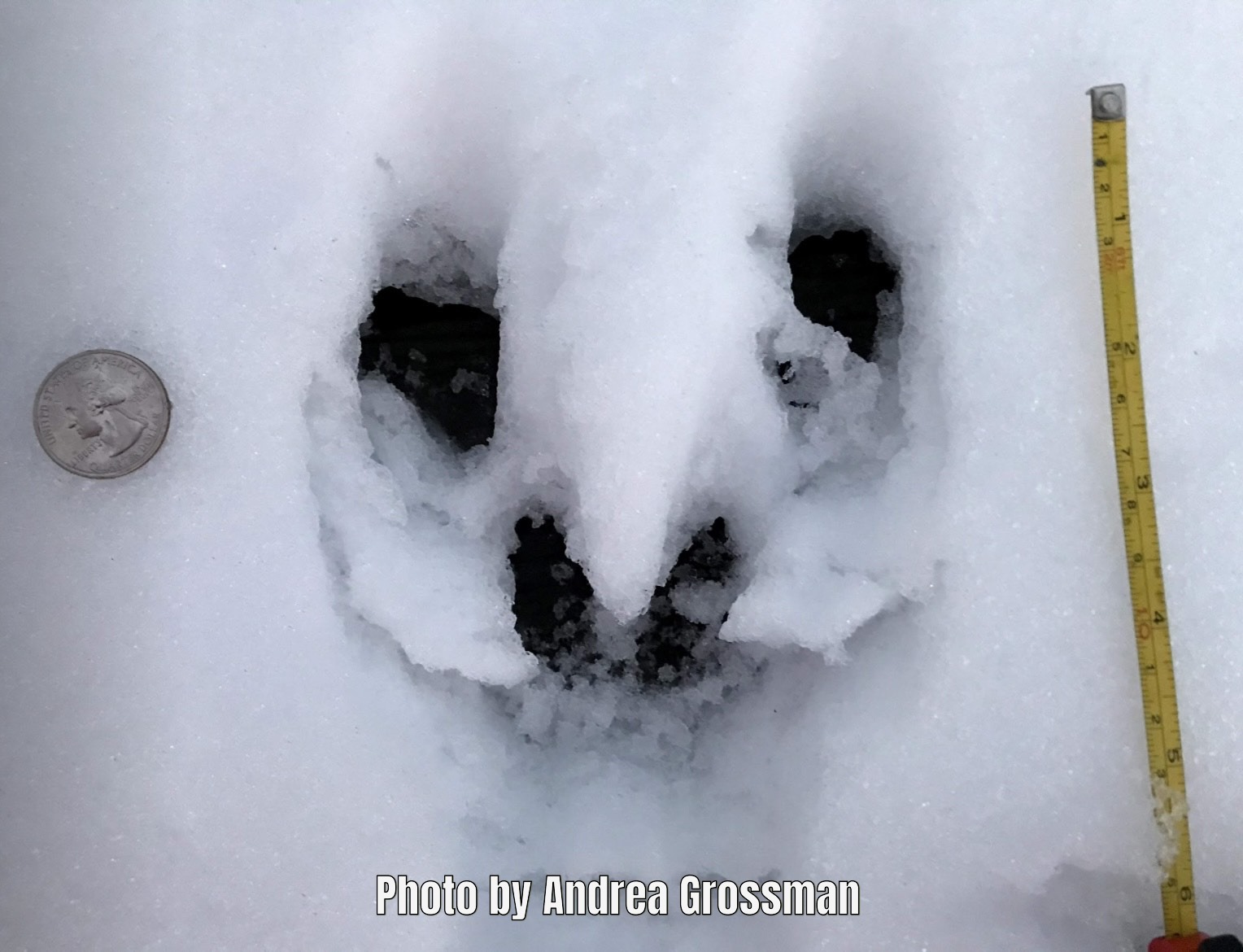
If you’ve found a track, it may be easy to tell if it’s a deer or a moose. These tracks are two hooves symmetrical to one another. Deer and moose tracks come to a point and about 2″ to 3″ in length. Moose tracks, on the other hand, are about 4.5″ to 5.5″ long and 3″ to 5″ wide. Moose tracks are not as pointed as deer tracks.
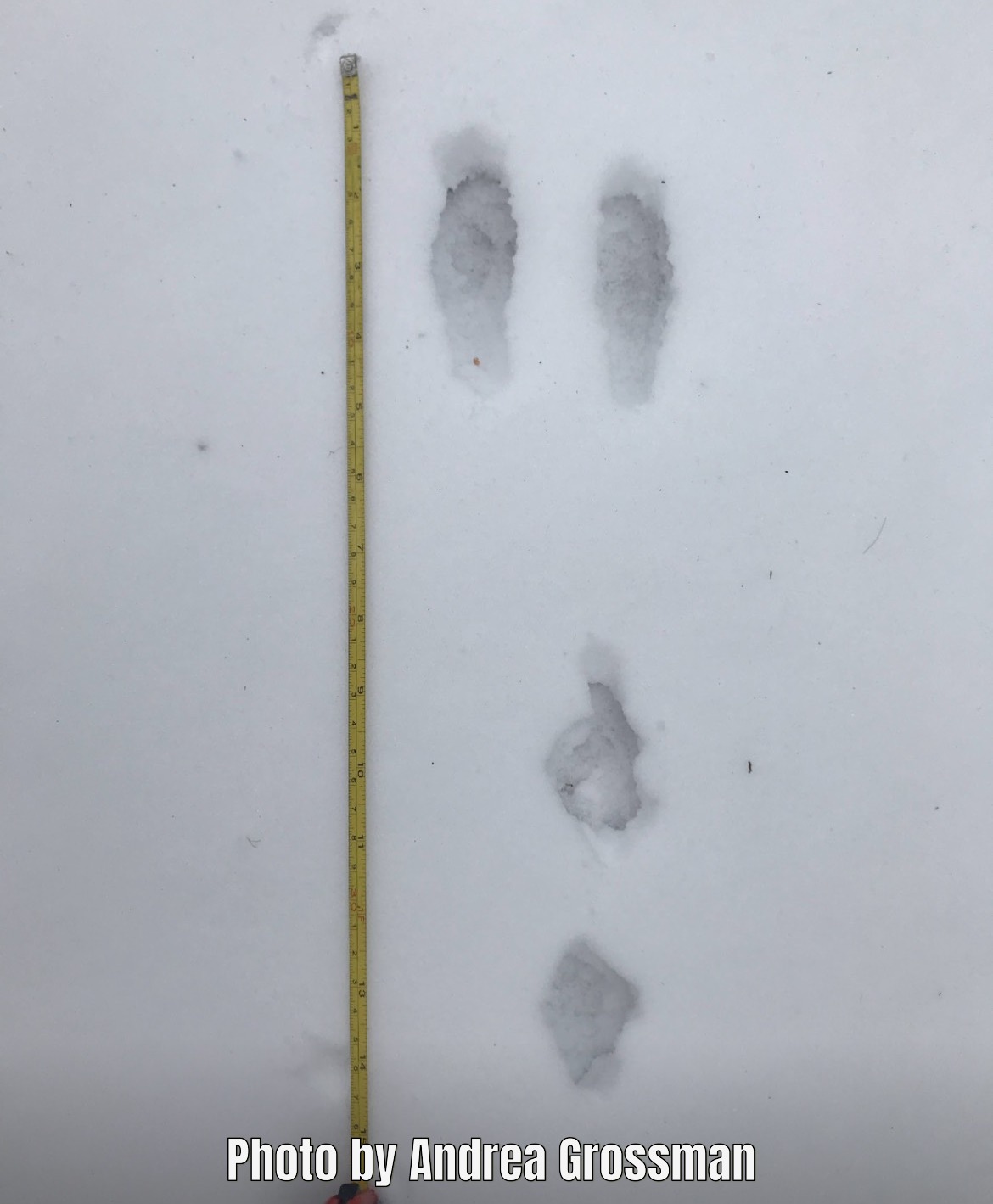
You never know what you might find walking out into the woods on a clear afternoon. If you’re walking near water, you may see otter or mink tracks. See a lot of scurrying around? Maybe a squirrel was trying to find its long lost cache. Cottontail rabbits may be trying to find better food sources or new cover.
So, what else can you do to help our native wildlife keep warm and protected? Keep brush piles in the corners of your yard for squirrels, ground-feeding birds, and rabbits. Have evergreen shrubs like spruce and arborvitae? Keep them untrimmed in the winter to keep them dense and protective. Provide roosting boxes for birds, even birds of prey such as owls, to provide them with a warm place to sleep. And as mentioned in our earlier newsletter, keep the leaf litter as it provides overwintering sites for pollinators.
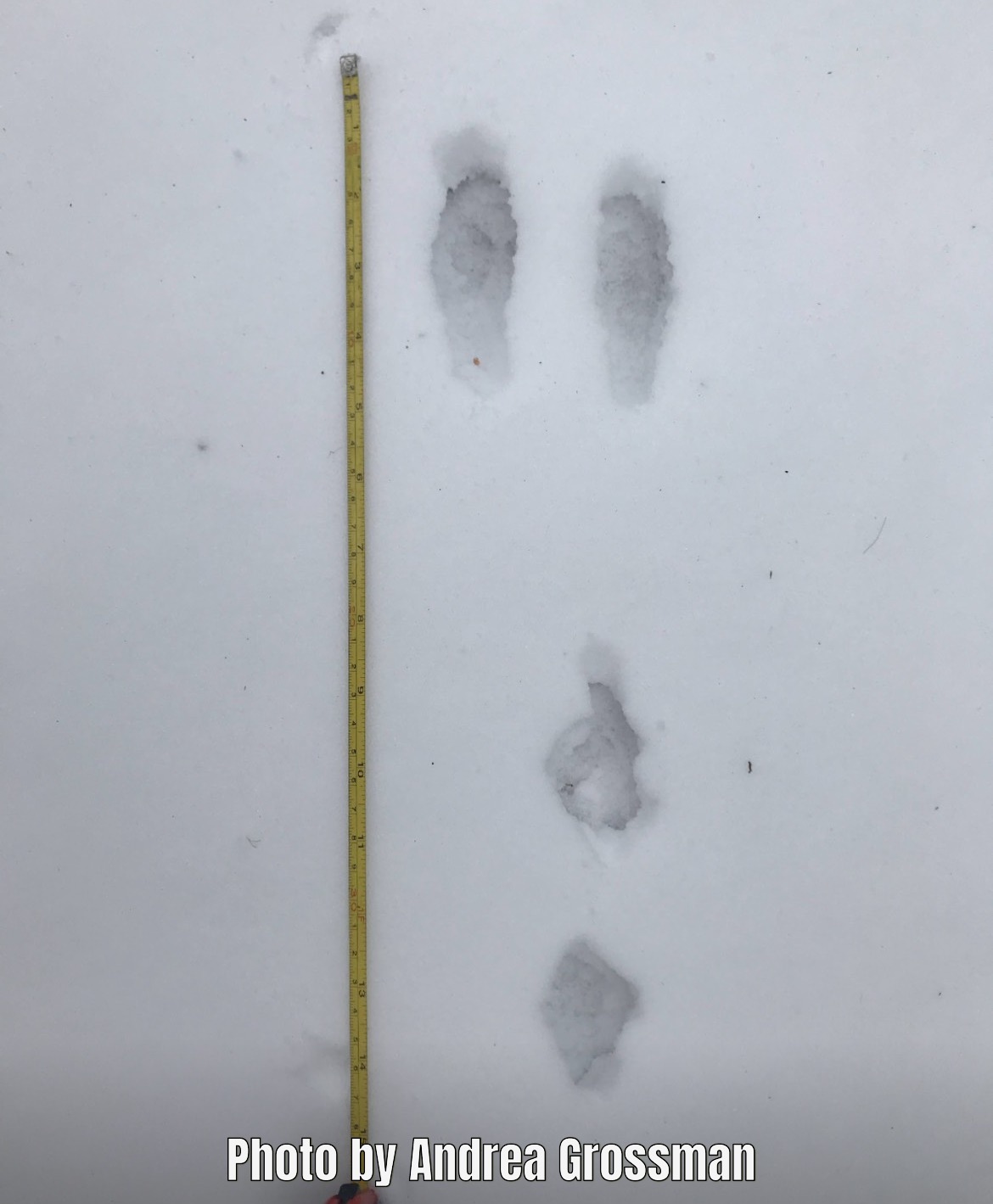
Here are some more wildlife tracks below:
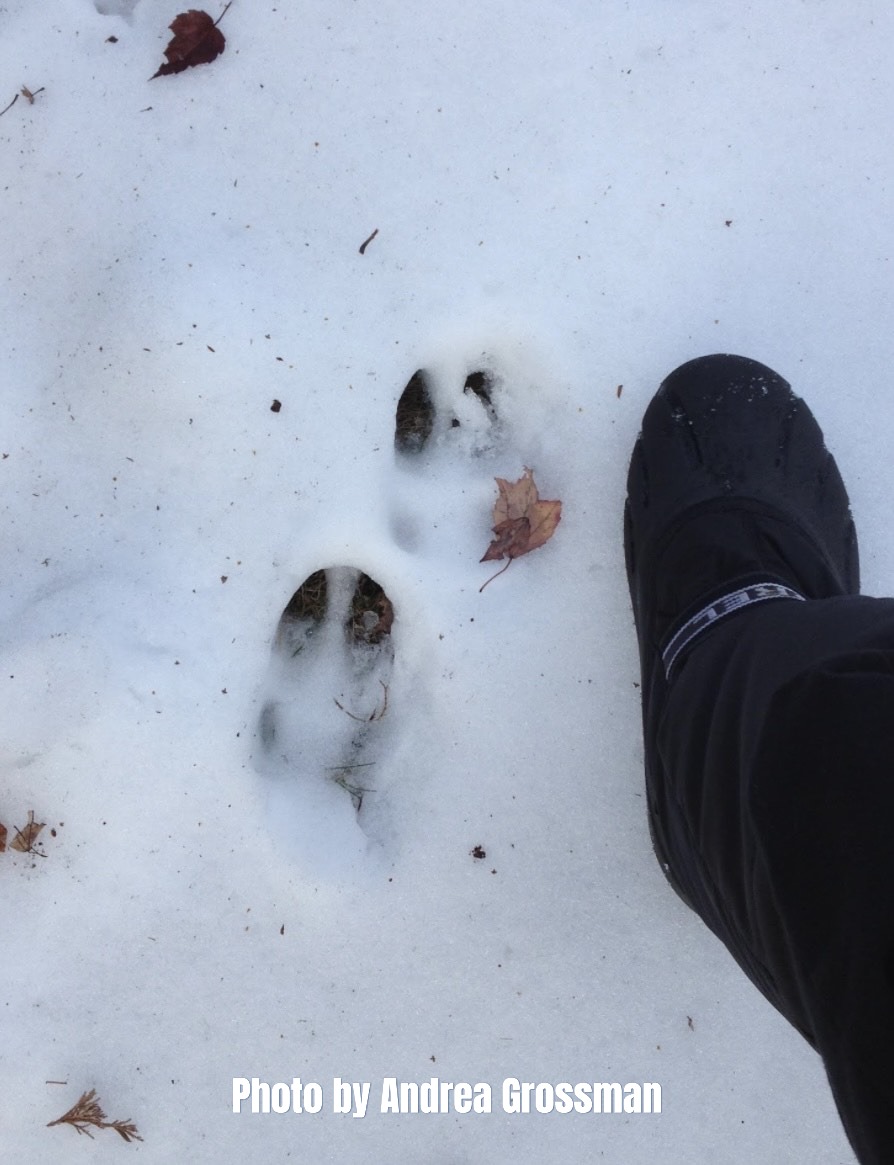
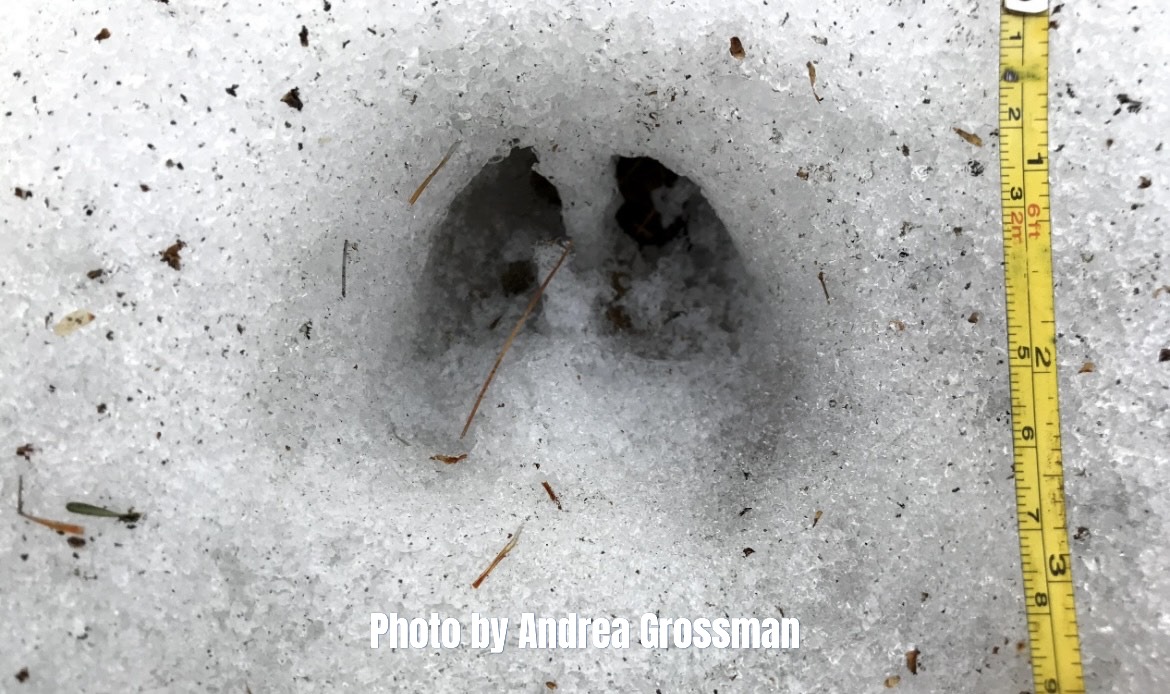
Want to know some more information about pollinators and wildlife in the winter? Check out some of this information below:
Bees & Butterflies
- https://extension.unh.edu/blog/2019/10/how-help-bees-butterflies-survive-winter
- https://xerces.org/blog/where-do-pollinators-go-in-winter
- https://sites.tufts.edu/pollinators/2021/11/where-do-wild-bees-go-in-winter/
- https://extension.psu.edu/programs/master-gardener/counties/monroe/news/native-bees
Birds
- https://www.massaudubon.org/nature-wildlife/birds/not-so-common-winter-birds
- https://libblog.lib.umassd.edu/2019/02/06/birdwatching-in-winter/
- https://thetrustees.org/coast-sustainability/for-the-birds-when-the-leaves-come-down-sightings-go-up/
- https://www.birds.cornell.edu/k12/how-do-song-birds-survive-winter/
- https://www.allaboutbirds.org/news/how-do-birds-survive-the-winter/
- https://centerofthewest.org/2019/02/18/how-birds-survive-cold-temperatures/
- https://www.birds.cornell.edu/k12/bird-friendly-winter-gardens/
- https://www.allaboutbirds.org/news/
Mammals & Other Wildlife
- https://www.massaudubon.org/nature-wildlife/mammals-in-massachusetts
- Event: https://www.massaudubon.org/programs/ipswich-river/99287-tracking-mammals-in-winter
- https://capewildlifecenter.com/cape-wildlife-center-news-what-do-animals-do-in-the-winter/
- https://www.massaudubon.org/news/latest/wicked-winter-survival-adaptations
- https://blog.zoonewengland.org/2022/01/tracking-for-beginners/
- https://www.mass.gov/news/get-to-know-animal-tracks
- https://www.massaudubon.org/nature-wildlife/mammals-in-massachusetts/bats
- https://www.massaudubon.org/nature-wildlife/reptiles-amphibians/turtles